Engineering biology is one of the most transformative technologies of our time: revolutionising how we address society’s most urgent challenges- from sustainable food systems and cutting-edge biomedicines to clean growth and environmental resilience. Advancing engineering biology responsibly is essential and standards and metrology- the science of measurement- are at the heart of this.
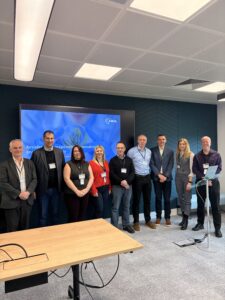
The National Measurement Laboratory (NML) at LGC brought together academics, research and industry partners, regulators and funding bodies for a strategic showcase and networking event, centred on enabling responsible innovation for engineering biology. The event, held on Monday 23 February, explored how measurement science and standards underpin safe, effective translation and responsible innovation across the UK’s engineering biology ecosystem.
“Responsible innovation is not just a “nice to have”—it is something truly critical that underpins all of our work across research, governance, and metrology. It is absolutely integral. The NML’s work, rooted in metrology standards and rigorous measurement science, reminds us that responsibility is built on precision, transparency, and a shared understanding across all of these disciplines.”- Scott Allen, Head of Engineering Biology, Department for Science, Innovation and Technology (DSIT)
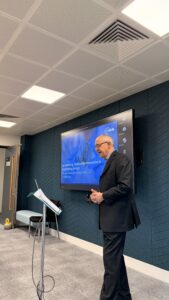
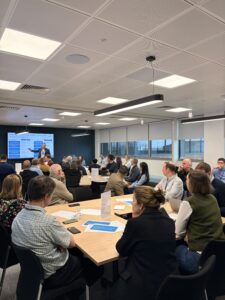
The day opened with an exploration of how the NML is supporting responsible innovation: through our chemical and biological measurement capabilities, the development of standards, and strategic collaborations. Speakers from the Environmental Biotechnology Innovation Centre (EBIC), the Pirbright Institute, the UKRI funded CYBER Engineering Biology Mission Award, Edinburgh Genome Biofoundry and GitLife Biotech discussed collaborative efforts with the NML to advance engineering biology as a transformative tool for developing novel synthetic vaccines for human and animal health, tracking engineered organisms, improving environmental monitoring and biosecurity, ensuring accurate microbiome measurements, and enabling safe, responsible pollution mitigation strategies. Talks also highlighted NML’s national DNA synthesis facility as an enabling capability to strengthen national biosecurity, accelerate innovation and improve traceability.
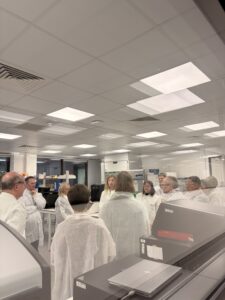
Attendees were welcomed on a tour of the NML’s state-of-the-art facilities, opened in October 2025, before a networking and poster session, inviting attendees to explore current and past engineering biology projects and engage in potential new areas of collaboration.
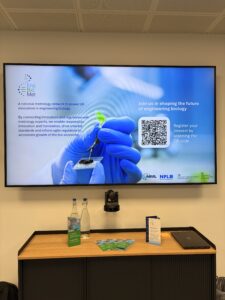
The event also provided an opportunity to introduce the EngBioMet network- a national metrology network designed to strengthen connections between innovators and regulators with metrology experts and ultimately supporting responsible, reliable and accelerated UK innovation in engineering biology.

To stay up to date with EngBioMet and to help us shape the future of
engineering biology, scan the QR code.
The event successfully provided a space to strengthen connections across the engineering biology landscape. By hosting a dedicated platform to share expertise, showcase capabilities and gain perspectives on the development of a national initiative, the NML continues to support the UK government’s mission to develop a robust engineering biology ecosystem to safely develop and commercialise innovative biological products and services.